

Boarding, training, and lessons
Show the program, facility, disciplines, instructor or trainer approach, requirements, and how to ask about availability. A strong inquiry path can reduce the phone tag that fills a barn manager's day.
Equine and ranch businesses
Most agencies will not learn this category. We already work in it. That means less time explaining the difference between a lesson barn, a boarding barn, a tack shop, and a service business built around horses.
Not one category
The buyer, calendar, and booking path change by segment. A lesson parent asks different questions than a feed customer. A breeder needs different proof than a farrier. The marketing should reflect that instead of treating every barn like a rustic lifestyle brand.
Show the program, facility, disciplines, instructor or trainer approach, requirements, and how to ask about availability. A strong inquiry path can reduce the phone tag that fills a barn manager's day.
Use real product content, clear availability, local pickup or shipping details, and product categories that make sense to working customers. Ecommerce has to answer practical questions, not just look western.
Farriers, vets, bodywork providers, hauling businesses, and breeding operations need service area clarity, credentials, seasonal information, and a direct way for a qualified customer to start the right conversation.
The geography is different
For many equine businesses, the service area is measured in counties, drive time, show circuits, or the distance a customer will haul. Google can still help a local business get found, but the site has to say where customers come from and why the trip is worthwhile.
Boarding and training prospects may travel farther for the right program. A farrier or veterinarian has a practical route. A tack and feed retailer can serve a local customer in person and a broader customer through ecommerce. Those are different service maps, so they should not share one vague local page. The site needs to show the geography in the terms customers actually use.
This category also has a calendar. Show dates, clinic schedules, school breaks, foaling season, spring pasture work, and holiday retail all affect what customers are looking for. The website and Google Business Profile need current details before people start asking.

Work already live
Equine massage and bodywork serving west Michigan. Built ahead of opening, so the site was ready to collect interest before the first appointment was ever booked.
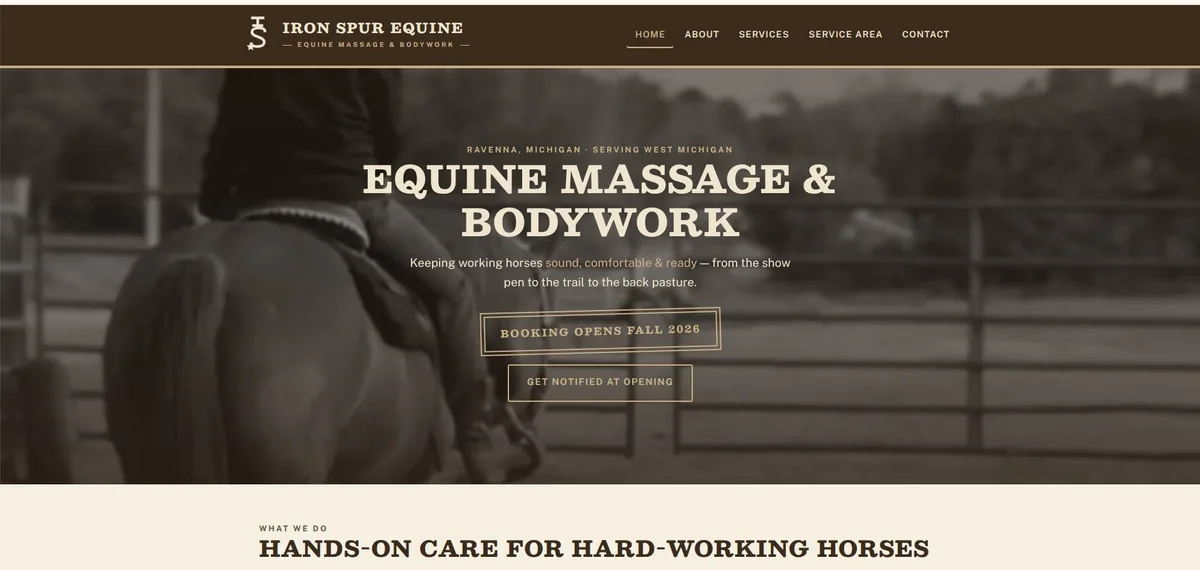
A live client site, not a template preview. Horse people can tell the difference between someone who works in this world and someone who found a stock photo.
Look like a real horse business
Horse people know when language is empty, disciplines are mixed together, or a photo has nothing to do with the work. A generic rural look does not carry trust here. The right content makes a business feel familiar to the customers it is trying to serve.
Use real barns, horses, products, lessons, staff, and events. Caption the work so visitors can understand the program, product, or service rather than guessing at a pretty image.
Use the terms your customers use and explain them accurately. Do not write around the subject with generic lifestyle phrases. Practical information is more persuasive to a serious buyer.
Tack and feed listings need dimensions, fit, materials, use cases, images, pickup details, and any information that prevents a needless question or a bad order.
For lessons, clinics, services, and consultations, a clear availability request or booking route saves time for both sides. The phone still matters, but it should not be the only way in.
Work already in the category
Tin Roof Digital has worked with equine and ranch businesses across the retail and service side of the category. The work is always built around the actual offer, the season, and the customer's decision process.
We built and run the site for 45 Ranch Supply, a feed and ranch retail business. Product content and an organized shopping path matter because customers need useful details before they make a trip or place an order.

We built the site for Rise Again Riding School. A lesson business needs to make its program, fit, and inquiry path clear to families who are deciding where to start.
We built the site for Cross J Tack. The work supports a retail experience where customers need credible product information and a shop that understands the use behind the purchase.

Where to start
Start with a manual Report Card. It reviews the Google Business Profile, local search, reviews, mobile experience, technical SEO, service and product pages, conversion setup, and the other areas that make a business harder or easier to find.
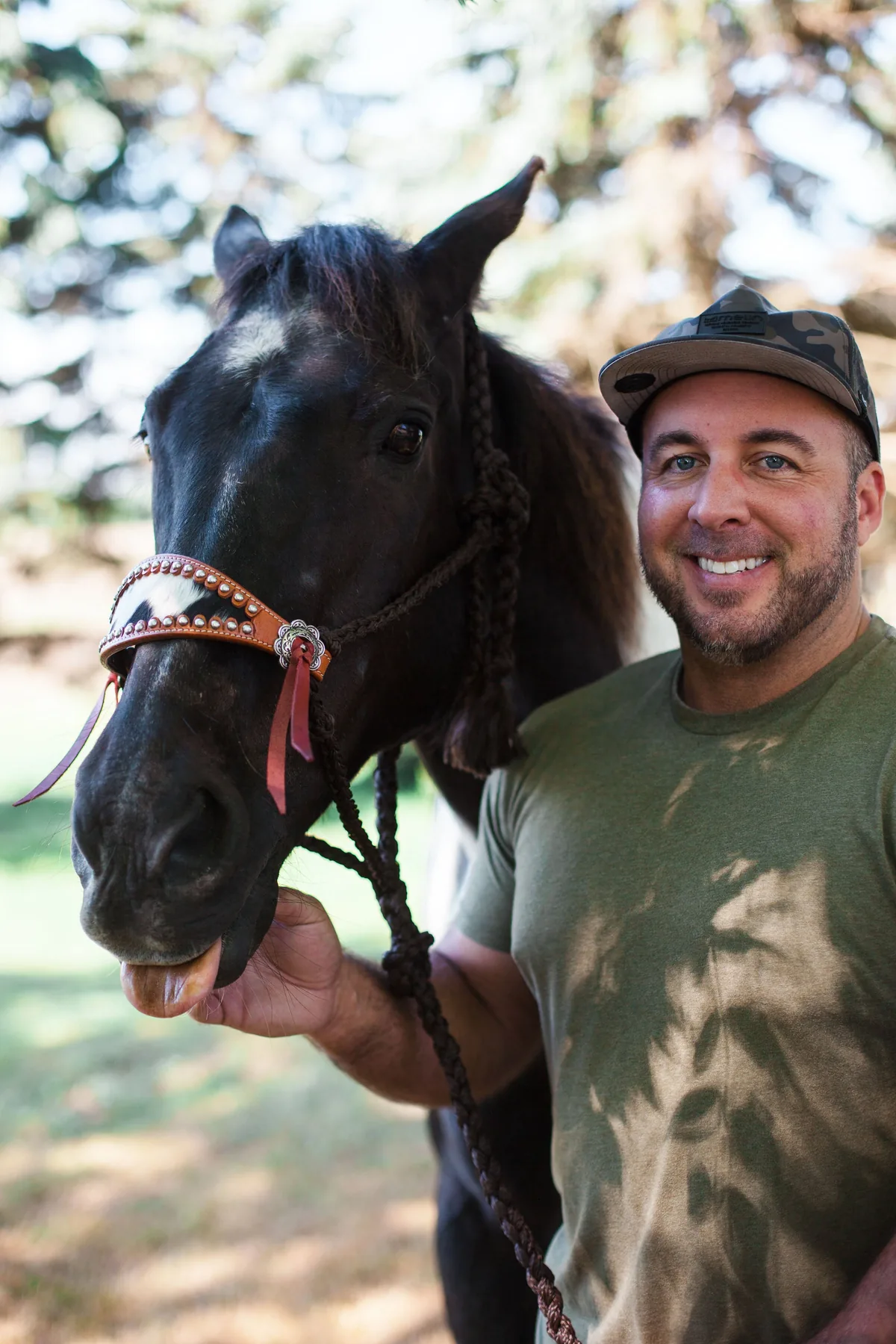
Sam Harrington leads the strategy and client relationship. If the work fits, the next step is a 30 minute conversation and a written scope with a fixed price. There is no forced retainer and no invented promise about rankings.
Equine marketing questions
Website care starts at 129 dollars a month for shops and retail, up to 5 pages. Service companies start at 249 dollars a month, up to 8 pages plus service area pages. No setup fee, live in about 10 business days.
Google Business Profile work, larger builds, ecommerce catalogs, multi location scopes, and ongoing campaign management are quoted separately. The Report Card tells us which category you are in before anything is priced.
It can, if the setup reflects the program and the information needed from a new rider. Some businesses need an inquiry step before booking. The point is to reduce needless back and forth, not force every customer into the same path.
Target the area you can serve well, which may be counties or a practical drive radius. A service page should be honest about coverage instead of claiming a map that cannot be supported in the field.
Not every shop needs a full online catalog, but real product content can help customers decide to visit, order, or ask a better question. The right scope depends on inventory and how the business sells.
Update programs, availability, clinic and show dates, seasonal services, holiday schedules, and current product information. Content should follow the actual calendar customers care about.
No. Google controls rankings. We focus on making the business clear, current, and credible across the website, profile, reviews, and local signals that a customer can actually see.
Get a free manual Report Card with clear notes on the gaps making your business harder to find, trust, or book.
Returned within 24 hours on business days. No call required.