

Draw the service area honestly
State the towns, neighborhoods, counties, or travel limits the crews can support. Do not chase searches in distant areas if the drive makes the work a poor fit.
Landscaping and lawn care
For a seasonal business, much of the year is won in a narrow window. When the weather turns, homeowners call the company that is visible, credible, and ready before the neighbor gets there first.
The calendar drives demand
Spring rush, summer maintenance, fall cleanup, and winter snow work create different buying moments. The site, Google profile, reviews, and ad plan should be prepared for the next one while there is still time to make good decisions. The calendar should drive the plan instead of an emergency response.
Homeowners search for cleanup, mulch, lawn care, planting, drainage, hardscape, and new design work. The company that gets clear service pages and estimate paths live early has a better shot at filling the schedule with work it wants.
Recurring maintenance needs consistency. Route work, lawn treatment, irrigation, and recurring property care should be simple to understand and easy to request without making the office repeat the same information on every call.
Cleanup, leaf removal, pruning, and winter preparation create another rush. Update the service pages and Google Business Profile before the first major weather shift, not when the team is already buried.
Snow removal can be the revenue line that keeps crews and equipment working. Commercial and residential customers need to know service areas, trigger expectations, contact paths, and what is included before the forecast changes.
Two kinds of work
Recurring maintenance contracts depend on dependable service, a clean quote path, route coverage, and clear expectations. The buyer often wants a reliable crew to take a routine task off the list. They need to know you serve their property and have a practical way to get started.
Design and install work is a different decision. It may involve patios, retaining walls, drainage, planting, lighting, grading, or a full outdoor plan. The buyer wants visual proof, project detail, and a sign that you can manage a higher involvement job from the first walk through to the finish.
The site should separate those paths. A homeowner searching for weekly mowing should not have to sort through a portfolio of hardscapes. A design prospect should not land on a generic lawn care offer and wonder whether the company can handle their scope.
A clear service path gets you booked before the neighbor does.

Work already live
Excavation, land clearing, septic, grading, ponds and demolition across the South Bend and Elkhart market. Service area pages for every town they work in, and a quote path built for someone standing on a job site with one hand free.
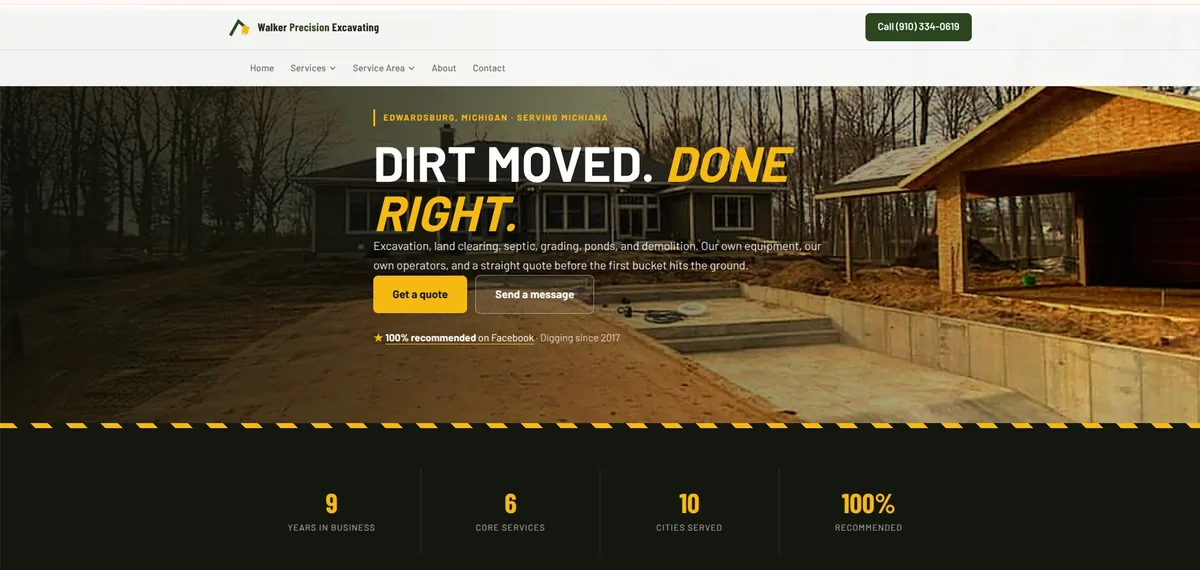
A live client site, not a template preview. Every build starts from what the business actually sells and where it actually works.
Profit is geographic
A beautiful map of every town around you can hide a real problem. Long drive times, scattered small jobs, and service areas shaped by hope eat into the margin. The online message should reinforce the territory where your crews can do their best work.
State the towns, neighborhoods, counties, or travel limits the crews can support. Do not chase searches in distant areas if the drive makes the work a poor fit.
Reviews, project photos, and useful service detail from the areas you want to serve help a prospect see that you work nearby. Local content should be genuine, not thin city pages repeated across a map.
When paid search is useful, target the services and coverage that fit the schedule. Turn the spend down when the crew is full. Lead volume is not a win if it makes the good work harder to run.
Show the transformation
Landscaping is visual, but a gallery alone is not enough. Project images should help a buyer understand the scope, site challenge, materials, design decisions, and finish. That supports the estimate conversation before someone ever fills out a form.
Use real project photos from more than one angle. Add a short explanation of the problem and the work completed. A drainage fix, a retaining wall, a planting plan, and a lawn renovation each tell a different story.
Recent work and current reviews show that the business is active. Ask after completed projects in a consistent way, respond to feedback, and bring useful review themes onto service pages where they help the next buyer decide.
Search and conversion basics
Give each meaningful service a page that answers the first questions. Explain the service area, season, project type, and next step. Use real work to show the level of detail you bring. Then make the contact path work smoothly on a phone while the buyer is looking at their yard.
The Google Business Profile needs the same care. Categories, service areas, hours, project photos, recent reviews, and contact information should reflect what the business does now. That is the foundation for local discovery when demand is high.
Tin Roof Digital starts with a free manual Report Card across twelve areas, including the profile, map visibility, reviews, mobile experience, service pages, conversion setup, competitors, and AI search visibility. Sam Harrington leads strategy and the client relationship. If it makes sense to work together, you receive a written scope with a fixed price.

Landscaping marketing questions
Website care starts at 129 dollars a month for shops and retail, up to 5 pages. Service companies start at 249 dollars a month, up to 8 pages plus service area pages. No setup fee, live in about 10 business days.
Google Business Profile work, larger builds, multi location scopes, and ongoing campaign management are quoted separately. The Report Card tells us which category you are in before anything is priced.
Start before spring demand arrives. The exact timing depends on climate and service mix, but service pages, profile updates, photography, reviews, and any paid work should be ready before homeowners begin their seasonal searches.
Yes, when the buyer intent is different. Recurring maintenance and a larger design or install project need different information, proof, and contact paths.
Give snow services their own clear path before winter. Describe service areas, the types of properties you handle, contact expectations, and the details customers need before they request service.
Marketing determines where inquiries come from. If the site and ads attract work across a scattered area, crews spend more time driving and less time on productive work. Target geography should support the operation.
No. We cannot guarantee a volume of leads or jobs. We focus on the controllable work that helps the right local buyers find the business, understand its fit, and reach out without friction.
Send your site for a free manual Report Card and find the local search, service page, review, and mobile issues worth fixing first.
Returned within 24 hours on business days. No call required.