


But I would check the website and inquiry process before recommending either. If someone cannot tell whether you do their job, work in their town, or will respond to their request, that is where I would start.
SEO vs. Google Ads: what are you paying for?
SEO is the work that helps your website become more useful and visible in unpaid search results; Google Search ads let you bid for paid visibility when people search (Google's explanation of SEO and PPC). I would evaluate both against the same business question: are they helping the right people reach you?
For a contractor's SEO plan, I would start with clear service pages, accurate business information, real project examples, and the towns the business actually serves. That is the foundation of our SEO services for contractors, rather than publishing a long list of city pages and hoping something ranks.
For a paid-search plan, I would start with a narrower decision: which service, in which territory, should we test first? Then I would agree on the budget, destination page, measurement, and review point before launch.
One distinction matters: buying Google Ads does not improve your organic rankings (Google's SEO and PPC guidance). I would treat paid advertising and SEO as separate investments that can share useful website improvements, not as a way to buy a better organic position.
Which should come first?
Here is how I would make the initial decision. This is a starting framework, not a fixed package or promise of results.
You have capacity, a specific service to promote, and money set aside for a controlled test.
Consider a focused paid-search campaign after checking the inquiry path.
You want stronger visibility for services and towns you expect to serve for years.
Prioritize useful service content, local-search fundamentals, and real project proof.
Your site is vague, difficult to use on a phone, or missing a clear contact path.
Fix those problems before paying for more visits.
You receive inquiries but lose track of them or struggle to book appointments.
Review response ownership and follow-up before increasing acquisition spend.
You have a working website, reliable follow-up, and room to fund both channels.
Build organic visibility while testing paid demand with separate reporting.
A roofing example: the work after the click

For a metal-roofing contractor in Goshen, Indiana, our work connected the website, local-search foundations, paid campaigns, online quote requests, lead records, and office follow-up (roofing project case study). The practical lesson I take from that work is that choosing an advertising channel is only one part of the job.
For another roofing business, I would first ask who receives each inquiry, how it is assigned, and how the office records the outcome. Then I would build the campaign around the work the crew wants and can actually deliver.
The process I would check before adding spend
- 01 / FINDRelevant search
- 02 / UNDERSTANDUseful service page
- 03 / CONTACTClear inquiry path
- 04 / RESPONDOffice follow-up
An excavation example: make the service and territory clear
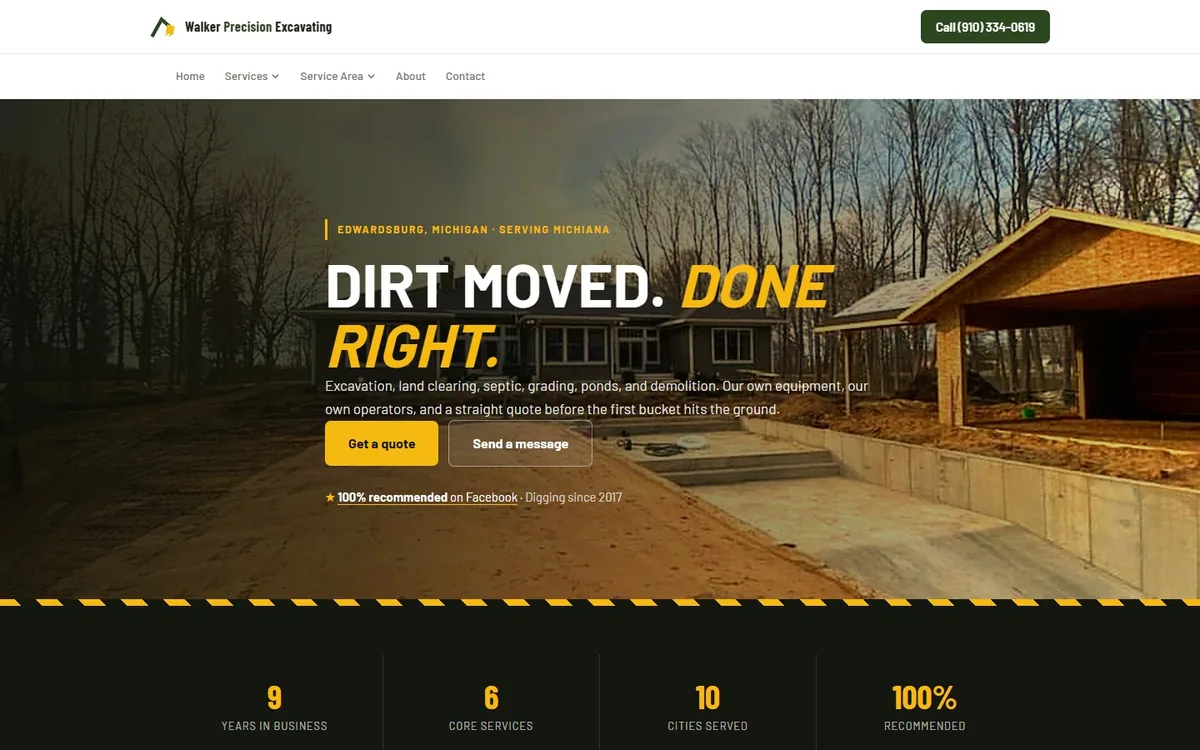
Our excavation and sitework example serves Southwest Michigan and Northern Indiana, with service information, job-site photography, and a direct quote-request path (Tin Roof's client-work overview). The contractor's website describes distinct work such as site preparation, land clearing, septic installation, grading, pond construction, and demolition.
For a business with that range, I would not begin with a campaign promoting “everything we do.” I would ask which jobs are most useful to win next, where the equipment can travel economically, and which projects best demonstrate that work.
If site preparation were the priority, my recommendation would be to make that service easy to understand first: the type of work offered, the service area, useful project photos, and what information to send with a request. Only then would I decide whether to promote it through paid search, strengthen its organic page, or do both.
That is a recommendation based on the service mix, not a claim that this excavation business achieved a particular ranking or advertising return. The example illustrates the foundation I would want in place before choosing a channel.
Keep Google Search ads and Local Services Ads separate
Google Search PPC and Local Services Ads are not interchangeable: Search PPC charges for ad clicks, while Local Services Ads charges for valid leads (Google Search PPC, Local Services lead charging). When reviewing results, I would keep each source visible instead of treating every Google inquiry as the same thing.
Our paid advertising services for contractors cover service-focused campaigns, relevant landing pages, tracking, and review of inquiry quality. The scope should identify which channels are involved, what is being measured, and which costs are separate.
Decide what a useful result looks like before spending
Before recommending a budget, I would want to know the services you want to sell, the territory you can cover, the margin available on that work, and how many additional jobs the team can handle. I would also want a named person responsible for responding to inquiries.
Then I would agree on a short set of measures:
- Relevant inquiries: Requests for work you offer, inside the area you serve.
- Booked appointments: Inquiries that become a confirmed next step.
- Proposals and signed work: Outcomes recorded by the business, not inferred from a button click.
- Acquisition cost: Media spend, management, and other agreed costs kept visible.
I would use those records to decide whether to continue, adjust, or stop a test. A busy dashboard is not enough reason to spend more.
Free, personal website report card
Know what to fix before you spend more
My recommendation is not “SEO for everyone” or “ads for everyone.” Start with the job you want, the market you can serve, and the point where a prospective customer is currently getting stuck.
Send me your website. I will email you a personal report card with three priority fixes for your website, local visibility, and inquiry path within one business day.
Get my free website report card
No required sales call. No account access needed. This is a website review, not a full paid-ad account audit.